

The Brain's CEO
The Brain's CEO
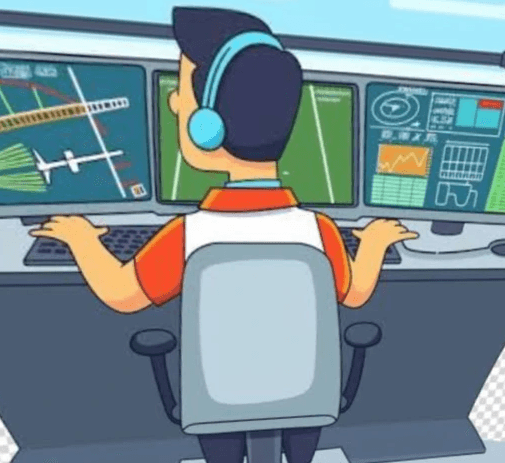
Executive functioning sounds like a catch-all term, similar to that of a CEO. In actuality, executive functioning skills have exactly that role!
Procrastination with homework? Executive functioning. Leaving long-term assignments until the night before they are due? Executive functioning. Taking incomplete or disorganized class notes? Executive functioning.
Executive functioning plays the part of "traffic controller." It keeps the runways flowing smoothly and orderly. Executive functioning helps the brain make sense of the emotions, thoughts, and actions resulting from external stimuli. These skills help the brain prioritize tasks. They help the brain determine what items are necessary to successfully complete a task. Executive functioning skills help make a plan of attack. Studying, sustaining friendships, holding down a job, or managing a crisis--which pose even bigger challenges--are all controlled by one's executive functioning abilities.
These skills are comprised of three different categories:
-WORKING MEMORY: This category allows the brain to keep information immediately available for short amounts of time. A typically functioning working memory is able to hold on to information and manipulate it using newly acquired information.
-COGNITIVE FLEXIBILITY: Think of this category as the gear shift. It allows bits of information to be manipulated when rules and guidelines change. This flexibility lets the brain switch from task to task, and adjust when necessary.
-INHIBITORY CONTROL: This category does exactly what its name implies: it provides inhibition against impulses and distractions.
Now that we have the basics of executive functioning down, we are free to turn to the "Nature vs. Nurture" debate. The bottom line is that executive functioning skills are developed. However, the amount of development is fed by one's environment and experiences.
As children grow, they are given an increasing amount of autonomy. A two year old would not be allowed to cross the street on his or her own without being held by an adult. A ten year old would be allowed to do so when accompanied by an adult, most likely holding hands. A fifteen year old would typically be allowed to cross the street on his or her own. In order to model the appropriate skills necessary for crossing the street adults 'scaffold' the desired behavior. At two years old the adult holds the child; completely modeling the action. At ten the scaffolding is relaxed a little, allowing the child to cross the street holding hands with an adult. This gives the child more control over his or her body providing adult oversight. When working with typically developing excutive functions at fifteen a child is in control of his or her body and mind, for the most part. By allowing this child to cross the street unaided the executive function control has been mostly handed over to the fifteen year old.
Executive functioning begins to develop in infancy and does not reach completion until the early adult years, and possibly after. These skills have far reaching effects. Not only does excutive functioning play a role in academic success, but also in social success. xecutive functioning. The simple truth is that learning how to focus, plan, and control impulses is a huge piece of the developmental puzzle.